This column was published in the Cranbrook Daily Townsman Tuesday August 17, 2010.
Biodiversity is one of the more popular terms bandied about in support of conservation. It is generally seen as something that is good, often threatened and critical to be protected. However it is one of the more complex aspects of ecology. At its very basic, biodiversity is analogous to the number of species present within an area. But that can be very misleading. The abundance of each of those species is also key.
There’s more. Within a species, the genetic diversity is important. Maintaining a gene pool deep enough to adapt to changing environments is critical. At a much larger scale, maintaining a diverse landscape is also key. Diversity at this level ensures different habitats are available, which generally means more species, but is also a way of hedging against environmental loss. Just as a diverse financial portfolio is important to avoid fiscal ruin, so is a diverse environment necessary to fend off broadscale catastrophe.
In recognition of the importance of biodiversity, the United Nations has declared 2010 as International Year of Biodiversity. Let’s celebrate with a short list of unheralded East Kootenay species, numbered in no particular order, that usually go unnoticed. These are species that either occur nowhere else in the world, or within Canada, or are otherwise exceptional.
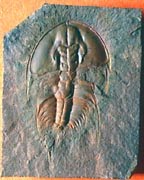
1. Trilobites: Ancient crustaceans, trilobites are among the most commonly fossilized animals in the world. And the Rocky Mountains of the East Kootenays are a wealth of fossils dating from the Cambrian period which centred on 500 million years ago. Numerous sites around Cranbrook are well known by fossil hounds, especially the Lower Cambrian Eager Formation near Fort Steele . Samples from these sites have made significant contributions to our knowledge of that part of the earth’s history.
2. Rocky Mountain Tailed Frog. In Canada, these unique small frogs are found in only two drainages, both in the East Kootenays. No pond lover, this unique amphibian prefers undisturbed, clear-running montane streams. Only males have a tail, which is actually a copulatory organ. Initially thought a subspecies of the more abundant coastal tailed frog, genetic work in 1990s demonstrated it to be a unique species.
3. Pygmy Slug. This sometimes brilliant blue small gastropod was first discovered in 2003. It’s scientific name, Kootenaia burkei celebrates its local origins from the Kootenay River region of Idaho panhandle, NW Montana and the Moyie River area north of the border. Barely a centimetre long, they’re found in wet forest floors in leaf litter.
4. Elk River Cottonwoods: along the banks of the Elk River near Morrissey, 400 year old black cottonwood trees provide abundant shade and structure to a host of other plants and animals. Some of the largest, oldest cottonwoods in the world, these trees were already 200 years old when David Thompson first passed through the Kootenays. A new trail established by the Nature Conservancy of Canada just across the Morrissey bridge offers a wonderful chance to witness these marvels.
 |
| Mottled Sculpin |
5. Rocky Mountain Sculpin: Sculpins have stymied fish biologists for a long time. Sorting out separate species has thwarted many, and the Rocky Mountain Sculpin is no different. This is small, sedentary fish is found in only a few locations within the Flathead River drainage. So confusing, scientists have yet to figure out exactly which species it is, referring to instead as a generic Cottus sp. They know it is different from other sculpins in the area, but not quite sure yet just how different.
6. Southern Maidenhair Fern: Another mystery. In Canada, this fern grows in just one location: Fairmont Hot Springs. Some 1000 km north of the species’ range limit across the southern US, it is found nowhere else in this country. The fern grows delicate green fronds more like a buttercup leaf than a typical fern. It requires the constant humid warmth of the hot springs and the limestone substrate on which it grows.
There is much more to the vaunted Kootenay wildlife than elk, deer and bears. Habitats range from inland forests of cedar and devil’s club to semi-arid grasslands; from valley bottom wetlands to alpine heather. This close proximity of so many different ecosystems can’t help but support a broad diversity of life.
The following was published in the Cranbrook Daily Townsman, Tuesday, May 4, 2010.

But if you are lucky enough to live close to a pond or wetland, that evening song is soon joined by another voice. This one more rhythmic than melodic. Steady. Emphatic and determined. The steady krek-ek… krek-ek… of the Pacific tree frog is as much a sign of spring in the East Kootenay as any crocus or bluebird.
Pacific tree frogs are one of the more common amphibians in southern British Columbia, occurring from the coast east to the Rocky Mountain Trench. Highly variable in colour as a species, we here in the East Kootenay get the drab olive variety, with a black triangular mask behind their eyes. They’re small in size – rarely more than 5 cm long. Their range ends as the Lizard and Galton ranges climb from the valley into west slope of the Rockies. But many small ponds, sloughs and wetlands throughout the Trench are the site each spring of a ritual pilgrimage for the tiny amphibians.
For an animal that is reliant on the whims of fickle spring weather, frogs are remarkably adapted to cold. Some nights when the temperature battles hard to remain above freezing, we can still hear the frogs croaking away in late April.
As the snow melts and frost eases from the ground, tree frogs emerge from their hibernation – a winter spent under the chilly blanket of dead leaves and other forest floor cover. Many frogs have an physiology adapted to super-cooling that allows them to virtually freeze during the winter. Provided they are not disturbed, they literally thaw out the next spring and start their year anew.
They return to ponds each spring only to breed and lay eggs. As all amphibians, their larval stages are fully aquatic. Tree frog tadpoles or pollywogs develop rapidly, metamorphosing into terrestrial adults within two months. They have to grow quickly, for their pond is often ephemeral and dries out under the summer sun.
Like most tree frogs, their toes have suction cups on the end to facilitate climbing into their eponymous lair of small trees and shrubs where they spend most of the season, often quite distant from water. Here they feast on a typically froggy diet of insects, spiders and other bugs caught from their not-so-lofty perches. Unlike most frogs, which only call during the spring breeding season, Pacific tree frogs often just can’t hold back. Any particularly glorious night of rain and damp misery may elicit a song of apparent joy from a tree frog’s throat.
However, ours is not a particularly joyful time for amphibians. Species the world over are in decline, and BC is by no means sheltered. Chytrid fungus, originally from Africa, has been unwittingly spread worldwide with devastating effects on our frog populations. Reducing transmission by not handling frogs and not visiting different ponds is the best way to restrict the disease. Any mass die-offs of frogs should be reported to the British Columbia Ministry of Environment.
This year, the pond in our neighbourhood is dry. The water table lowered from lack of snow and too long without rain. We have not yet heard the frogs, though I know they are singing elsewhere. I miss the call, lying in bed with the window open at night listening for their spring ritual. Species fated to the whims of climate are well adapted to adjust to a occasional dry years. We just hope this is an anomaly and not a portend of conditions to come. A spring without tree frogs is far too silent.